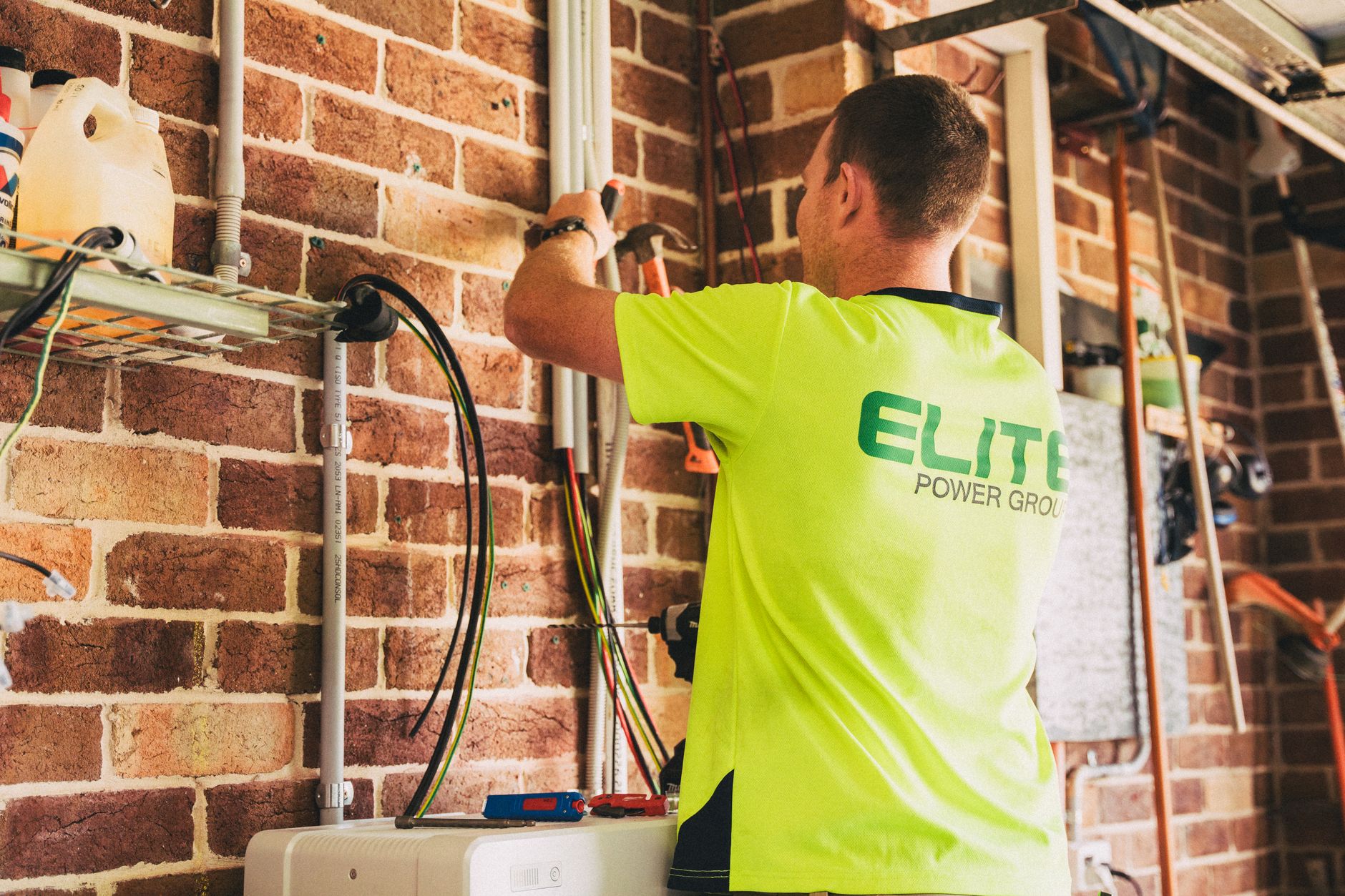
Home battery storage in the UK allows you to capture surplus solar electricity generated during the day and use it in the evening, reducing what you buy from the grid at peak rates. The technology has matured considerably since 2020 — prices have fallen, products have improved, and the economic case is now compelling for homes that generate a meaningful solar surplus. This guide covers how batteries work, what leading products cost and offer, and whether a battery makes financial sense for your household.
A well-sized home battery can increase a solar household’s self-consumption from around 30% to 60–80%, cutting grid imports significantly — and with electricity at 24p/kWh, every unit you don’t import saves real money.
How Home Battery Storage Works with Solar
Solar panels generate most of their electricity between roughly 9am and 4pm — times when many households are at work or school. Without a battery, the surplus electricity is exported to the grid (earning you a small Smart Export Guarantee payment) rather than being available when you need it most, in the evening.
A battery changes that equation. During the day, once your home’s immediate demand is met, surplus solar charges the battery. In the evening, you draw from the battery rather than the grid. A well-sized system can cover most evening electricity use, significantly reducing your grid import bill.
According to the Energy Saving Trust, a solar household without a battery typically self-consumes around 30–40% of what their panels generate. Add a battery and that rises to 60–80% — meaning far more of the electricity you generate, you actually use at its full market value rather than selling for a fraction of that.
Battery Capacity Explained
Battery capacity is measured in kilowatt-hours (kWh) — the same unit on your electricity bill. A 10kWh battery can store 10 units of electricity. The average UK home uses around 8–10 kWh of electricity in the evening and overnight, so a 10kWh battery theoretically covers a full night’s use from a day’s solar generation.
In practice, usable capacity matters more than headline capacity. Most lithium batteries have a depth of discharge (DoD) of 90–100%, meaning nearly all the stated capacity is accessible. Older lead-acid batteries were limited to 50% DoD, which is why modern lithium systems are substantially better value. Also check the battery’s C-rate — how fast it can charge and discharge. A 10kWh battery with a 5kW C-rate can charge fully in 2 hours, which is important if your solar generation peaks sharply.
Top Home Battery Products in the UK: 2026 Comparison
The UK market is dominated by a handful of well-regarded battery systems. All of the below are lithium iron phosphate (LFP) chemistry unless noted — LFP is considered safer (no thermal runaway risk) and longer-lasting than NMC lithium, and has become the standard for home storage.
Product
Usable Capacity
Peak Power
Warranty
Approximate Installed Cost
Notes
Tesla Powerwall 3
13.5 kWh
11.5 kW continuous
10 years (unlimited cycles)
£9,000–£11,000
Integrated inverter; solar-only or grid-charge; strong monitoring app
GivEnergy All-in-One 9.5kWh
8.2 kWh (usable)
3.6 kW
10 years
£4,500–£6,000
Popular UK brand; strong installer support; modular
Sungrow SBR HV (10kWh)
10.0 kWh
5 kW
10 years
£4,000–£5,500
Modular design; pairs with Sungrow hybrid inverters; competitive price
Huawei LUNA2000 (10kWh)
10.0 kWh
5 kW
10 years
£4,500–£6,000
High-voltage system; excellent efficiency; pairs with Huawei inverters
SolarEdge Home Battery (9.7kWh)
9.7 kWh
5 kW
10 years
£5,000–£7,000
Pairs with SolarEdge inverters; panel-level monitoring advantage
Puredrive Energy PureStorage 10
10.0 kWh
5 kW
10 years
£4,000–£5,500
UK-headquartered brand; good installer network
Prices shown are for supply and installation in mid-2026. Costs vary by installer and region; quotes in London and the South East tend to run higher. The Tesla Powerwall 3 commands a premium partly due to its integrated inverter — for new solar installations this can be cost-effective because you’re buying battery and inverter together.
How Much Does a Home Battery Cost in the UK?
Home battery systems in the UK range from approximately £2,500 for a small 5kWh unit up to £10,000+ for a high-capacity system with integrated inverter. The key cost drivers are:
Capacity: More kWh means more storage — and more cost. A 5kWh battery suits small homes or partial evening cover. 9.5–10kWh suits the average UK home. 15kWh+ suits large homes or those combining with an EV.
Whether you need a new inverter: If you already have a solar installation with a standard string inverter, retrofitting a battery requires either replacing the inverter with a hybrid inverter (£600–£1,500 extra) or using a battery with its own AC-coupled inverter. Factor this in when comparing quotes.
Installation complexity: Most batteries are installed indoors (garage, utility room, or even a living space for wall-mounted units). Access, cable runs, and any upgrades to the consumer unit add cost.
VAT: Batteries installed as part of a solar installation or alongside one qualify for 0% VAT. Standalone battery installations — where there are no solar panels — currently attract 20% VAT. This is a significant consideration if you’re thinking about adding a battery before installing solar. The Solar Trade Association’s battery storage guidance covers the VAT rules and policy position in detail.
Is a Home Battery Worth It? The Payback Calculation
This is the honest answer most battery guides skip: for solar-only households, the payback on a battery alone is typically 10–15 years at current prices. Batteries cost more than panels and save money more slowly, because the savings come from shifting electricity you’ve already generated rather than generating electricity from scratch.
However, the economics shift if you:
Use a time-of-use electricity tariff: Tariffs like Octopus Agile or Octopus Flux allow you to charge your battery from the grid at night when electricity is cheap (sometimes 5–10p/kWh) and discharge it during the expensive peak hours (up to 35p/kWh). This arbitrage can cut the payback period substantially — some households report savings of £500–£800/year from grid charging alone, independent of solar.
Have an EV: Combining a battery with solar and an EV creates a powerful energy stack. Solar charges the battery during the day; the battery charges the EV overnight. Our solar panels and EV charging guide goes into the economics in detail.
Have high evening electricity use: The more you use in the evening, the more the battery saves. Households using 8+ kWh in the evening benefit most.
For a straightforward solar household without time-of-use tariffs, a 10kWh battery saving £300–£450/year (by avoiding grid imports in the evening) pays back in roughly 10–15 years. Given most batteries carry a 10-year warranty and are expected to last 15–20 years, this is marginal. Adding a smart tariff typically cuts payback to 7–10 years and makes the decision easier.
Grant Support: Can You Get Help with Battery Costs?
The ECO4 scheme, administered by Ofgem, can fund battery storage alongside other energy efficiency improvements for eligible low-income households. Eligibility is linked to qualifying benefits (Universal Credit, Pension Credit, etc.) and your home’s EPC rating. If you qualify, ECO4 is worth pursuing seriously — the battery can be part of a funded package alongside insulation and other measures.
For everyone else, there is no standalone battery grant in England or Wales in 2026. Scotland’s Warmer Homes Scotland and Home Energy Scotland loan scheme have in the past supported battery storage — check Home Energy Scotland for the current position if you’re north of the border.
Should You Add a Battery to an Existing Solar System?
If you already have solar panels and are thinking about adding a battery, the main technical question is inverter compatibility. There are two approaches:
AC-coupled retrofit: The battery has its own inverter (AC-coupled) and sits alongside your existing solar inverter. This is the easiest and most flexible option — brands like Tesla Powerwall and GivEnergy support AC coupling. No need to replace your existing solar inverter.
DC-coupled with hybrid inverter replacement: Your existing solar inverter is replaced with a hybrid inverter, and the battery connects on the DC side. This is slightly more efficient but requires replacing working equipment. More commonly chosen when the existing inverter is aging or needs replacement anyway.
Get your installer to check which approach suits your setup. If your solar inverter is under 5 years old and working well, AC coupling is usually the more cost-effective path. For new-build solar installations, specifying a hybrid inverter and battery together from day one is generally the cleanest and most economical approach.
Summary: Home Battery Storage in the UK
Home batteries are a genuine and increasingly popular addition to UK solar systems. For most households, a 9.5–10kWh LFP battery from a reputable brand — GivEnergy, Sungrow, Huawei, or Tesla — costs £4,000–£7,000 installed and will meaningfully increase how much of your solar you actually use. The payback period at current prices is typically 10–15 years for solar-only usage, dropping to 7–10 years if you use a smart time-of-use tariff. The economics improve further if you have an EV or high evening consumption.
Before committing, get quotes from at least two or three MCS-certified installers who have experience with battery retrofits, and ask specifically about inverter compatibility and VAT. Our solar savings calculator can help you estimate how a battery would affect your household’s annual numbers. For a full picture of what your solar system costs before adding a battery, see our solar panel costs guide. You can also browse all our resources at the guides index.
To provide the best experiences, we use technologies like cookies to store and/or access device information. Consenting to these technologies will allow us to process data such as browsing behavior or unique IDs on this site. Not consenting or withdrawing consent, may adversely affect certain features and functions.
Functional
Always active
The technical storage or access is strictly necessary for the legitimate purpose of enabling the use of a specific service explicitly requested by the subscriber or user, or for the sole purpose of carrying out the transmission of a communication over an electronic communications network.
Preferences
The technical storage or access is necessary for the legitimate purpose of storing preferences that are not requested by the subscriber or user.
Statistics
The technical storage or access that is used exclusively for statistical purposes.The technical storage or access that is used exclusively for anonymous statistical purposes. Without a subpoena, voluntary compliance on the part of your Internet Service Provider, or additional records from a third party, information stored or retrieved for this purpose alone cannot usually be used to identify you.
Marketing
The technical storage or access is required to create user profiles to send advertising, or to track the user on a website or across several websites for similar marketing purposes.