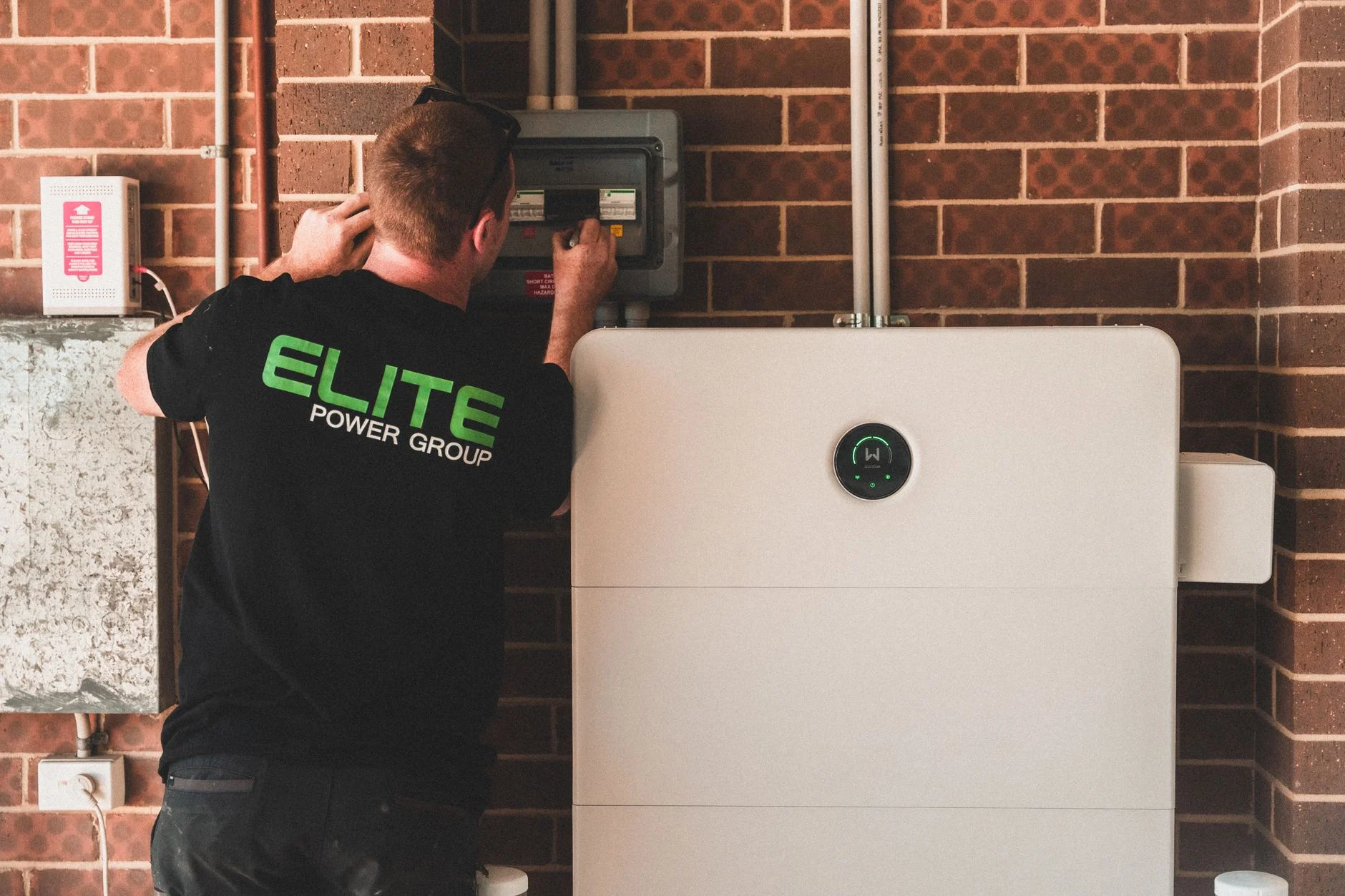
Home battery storage has moved from a niche product for early adopters to a mainstream choice for UK solar owners in the last three years. With electricity unit rates above 24p/kWh, storing your own solar and using it in the evening is straightforwardly economic — every kilowatt-hour you pull from your battery instead of the grid saves you money. But battery systems vary considerably in capacity, compatibility, cost, and how intelligently they manage energy. Here is an honest comparison of the five most relevant systems for UK homeowners in 2026.
What to Look for When Choosing a Home Battery in the UK
Before comparing products, it helps to understand the key specifications that matter:
Usable capacity (kWh): The amount of energy the battery can store and discharge. A typical UK home uses 8–10 kWh in the evening and overnight. A 9–10 kWh battery covers most evening demand from a day’s solar generation.
Power output (kW): The rate at which the battery can charge or discharge. A 3.6 kW system can run most household loads; 5 kW or more is needed if you want to power high-draw appliances simultaneously.
Warranty: Most batteries carry a 10-year warranty, typically guaranteeing 70–80% of original capacity at end of term. Check whether the warranty is capacity-based or cycle-based.
Chemistry: Most residential batteries use lithium iron phosphate (LFP) chemistry, which is safer and longer-lived than older NMC chemistry. If a product does not specify LFP, ask.
Solar compatibility: Some batteries are designed to work with specific inverters. Hybrid inverter systems (where the inverter and battery work together) are generally more efficient than AC-coupled retrofit systems added to existing solar.
Smart tariff integration: The best systems can be programmed to charge from the grid overnight at cheap rates (e.g. Octopus Go) and discharge during peak hours, turning your battery into a money-making tool beyond just solar storage.
Top Home Battery Storage Systems Compared
System
Usable Capacity
Power Output
Chemistry
Installed Cost
Warranty
Tesla Powerwall 3
13.5 kWh
11.5 kW peak
LFP
£10,000–£13,000
10 years, 70% capacity
GivEnergy 9.5 kWh
8.2 kWh usable
3.6 kW
LFP
£4,500–£6,500
10 years, 80% capacity
Sungrow SBR 9.6
9.6 kWh
5 kW
LFP
£5,000–£7,000
10 years, 70% capacity
SolarEdge Home Battery
9.7 kWh
5 kW
LFP
£5,500–£7,500
10 years, 70% capacity
Huawei LUNA2000
5–15 kWh (modular)
5 kW
LFP
£4,000–£9,000
10 years, 70% capacity
Tesla Powerwall 3: Best for High Power Output
The Powerwall 3 is a significant upgrade over the Powerwall 2 and has transformed Tesla’s position in the UK market. It integrates a solar inverter directly into the unit, making it a genuinely hybrid solution rather than an AC-coupled add-on. The headline specification is a 11.5 kW peak power output — far more than any competitor at this price point — which means it can comfortably run multiple high-draw appliances simultaneously, including EV chargers and heat pumps.
At 13.5 kWh usable capacity, it is also the largest single-unit system on this list. For large households with high evening consumption or EV charging demands, Powerwall 3 is the premium choice. The downsides are price (installed costs of £10,000–£13,000 are the highest here) and Tesla’s dependence on their own ecosystem — you will need a Tesla solar inverter or to use the Powerwall as AC-coupled. Which? has covered the Powerwall in its solar battery reviews and notes its superior app experience compared to competitors.
GivEnergy 9.5 kWh: Best Value for UK Solar Owners
GivEnergy has become one of the most popular battery brands in the UK, and for good reason: their systems offer solid performance at a genuinely competitive price. The GivEnergy 9.5 kWh paired with a GivEnergy hybrid inverter is the most common installation in the UK market in 2026, largely because installers are very familiar with the product and the GivEnergy portal provides excellent monitoring and smart tariff scheduling.
The 8.2 kWh usable capacity (the 9.5 kWh is nameplate; the battery reserves some capacity to protect longevity) covers evening demand for most three-bedroom households. The 3.6 kW power output is adequate for typical household loads but will limit simultaneous use of multiple high-draw appliances. GivEnergy batteries are compatible with Octopus Agile and Intelligent tariffs via their smart scheduling feature. At £4,500–£6,500 installed, it represents strong value. The 10-year warranty guarantees 80% capacity retention, which is better than most competitors.
Sungrow SBR 9.6: Modular and Installer-Friendly
Sungrow is a major global inverter and battery manufacturer, and the SBR range has been gaining significant traction in the UK. The SBR 9.6 offers 9.6 kWh of usable capacity at 5 kW output — more power than GivEnergy at a similar price. The system is modular (built from 3.2 kWh modules), meaning you can expand capacity later by adding modules rather than replacing the whole unit.
Sungrow batteries work best with Sungrow’s own hybrid inverters and are widely available through UK installers. The monitoring app is functional but not as polished as GivEnergy or Tesla. Smart tariff scheduling is supported. For households expecting their energy needs to grow — perhaps planning to add an EV in the next few years — the modular expandability is a genuine advantage over fixed-capacity competitors.
SolarEdge Home Battery: Best for Existing SolarEdge Systems
If you already have SolarEdge solar panels with DC optimisers, the SolarEdge Home Battery is the natural choice. It integrates tightly with SolarEdge’s HD-Wave inverter and monitoring platform, giving you a single unified system that is straightforward to manage. The 9.7 kWh capacity and 5 kW output are competitive, and the SolarEdge monitoring portal is among the best in the industry for granular production and consumption data.
The limitation is that SolarEdge batteries are really only appropriate for SolarEdge solar systems. If you have a different brand of panels or inverter, the integration is far less compelling and the cost premium is harder to justify. For existing SolarEdge customers adding storage, it is an excellent, low-friction upgrade. For new-build solar-plus-storage systems, it competes well against GivEnergy and Sungrow on merit.
Huawei LUNA2000: Best Modular Flexibility
Huawei’s LUNA2000 is the most modular system on this list, available in 5, 10, and 15 kWh configurations built from stackable 5 kWh modules. This makes it uniquely flexible — you can start with 5 kWh and add modules as your needs change, with a maximum of 30 kWh (six modules) per system. The 5 kW output is consistent across configurations.
Huawei pairs the LUNA2000 with their SUN2000 inverter range, which is well regarded for efficiency and reliability. The FusionSolar monitoring app is comprehensive. Some buyers have raised questions about data security given Huawei’s ownership structure — this is a legitimate consideration for some households, though the systems operate locally and do not require cloud connectivity for core functions. At £4,000–£9,000 depending on configuration, LUNA2000 offers competitive pricing per kWh of storage.
Should You Add a Battery to Existing Solar?
If you already have solar panels and are considering adding a battery, the key question is whether the economics work for your system. As a rough guide, a battery pays back in 7–12 years on its own merit (separate from solar), assuming you use it to shift solar generation to evening and also charge it overnight on a cheap tariff like Octopus Go. The Energy Saving Trust’s battery storage guidance provides a conservative but useful framework for assessing payback.
For new solar installations, a hybrid inverter and battery from day one is almost always more cost-effective than retrofitting AC-coupled storage later. Our home battery storage guide has a full decision framework for both new and retrofit installations, including a comparison of hybrid versus AC-coupled approaches. You can also use our solar savings calculator to model how a battery affects your total return on investment. For households with EVs, see our guide on combining solar with EV charging — a battery and EV together can dramatically improve the economics of solar.
All battery systems must be installed by a qualified electrician, and MCS certification of the whole installation (panels, inverter, battery) is required to maintain eligibility for the Smart Export Guarantee. Find an MCS-certified installer who is experienced with your chosen battery brand before signing any contract.
To provide the best experiences, we use technologies like cookies to store and/or access device information. Consenting to these technologies will allow us to process data such as browsing behavior or unique IDs on this site. Not consenting or withdrawing consent, may adversely affect certain features and functions.
Functional
Always active
The technical storage or access is strictly necessary for the legitimate purpose of enabling the use of a specific service explicitly requested by the subscriber or user, or for the sole purpose of carrying out the transmission of a communication over an electronic communications network.
Preferences
The technical storage or access is necessary for the legitimate purpose of storing preferences that are not requested by the subscriber or user.
Statistics
The technical storage or access that is used exclusively for statistical purposes.The technical storage or access that is used exclusively for anonymous statistical purposes. Without a subpoena, voluntary compliance on the part of your Internet Service Provider, or additional records from a third party, information stored or retrieved for this purpose alone cannot usually be used to identify you.
Marketing
The technical storage or access is required to create user profiles to send advertising, or to track the user on a website or across several websites for similar marketing purposes.