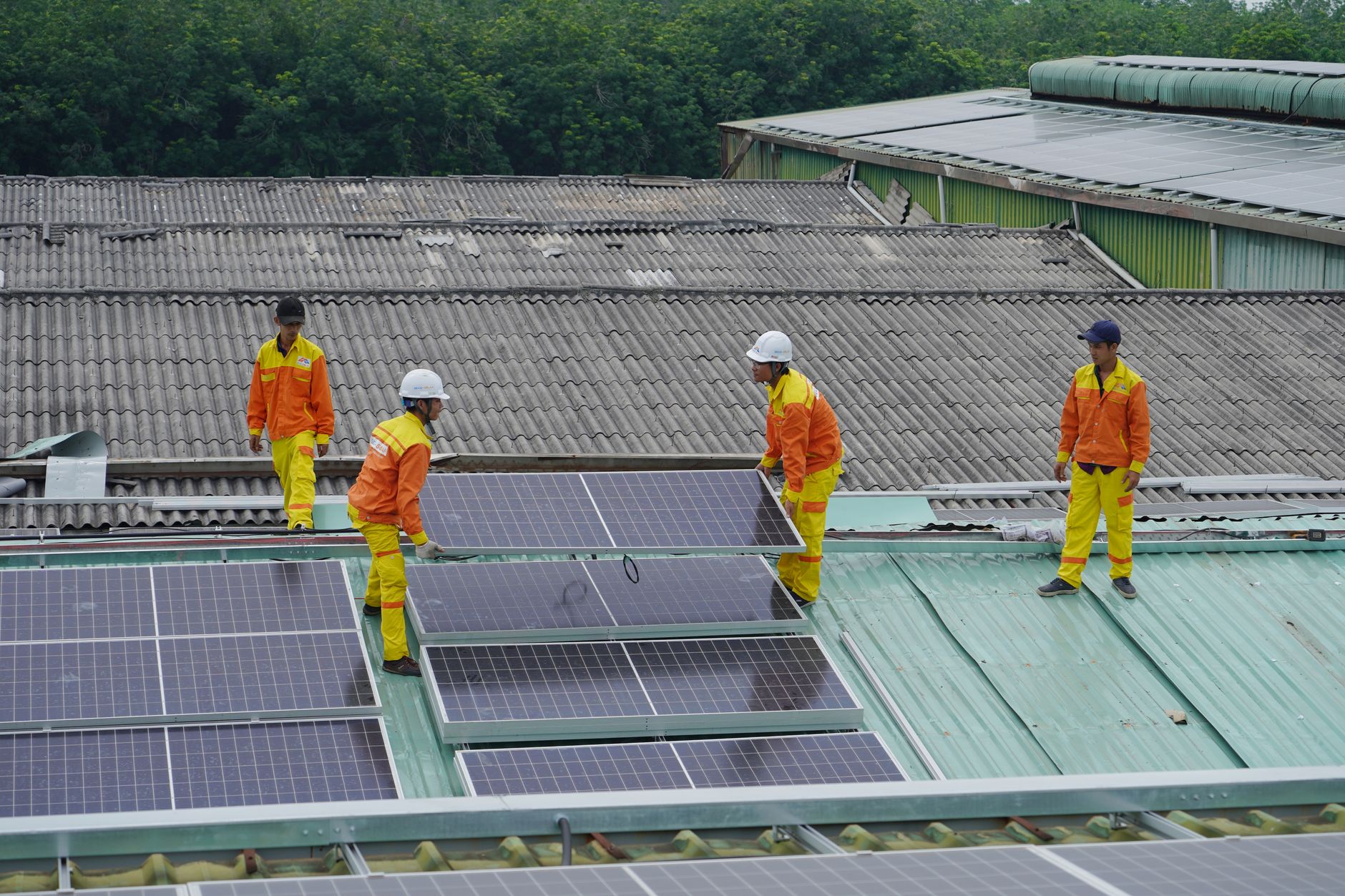
There are over 3,000 MCS-certified solar panel installation companies operating in the UK in 2026. The vast majority are competent tradespeople who will do a good job. A small minority are rogues — aggressive door-to-door sales teams, installers who subcontract to unqualified workers, or companies that disappear before honouring workmanship warranties. The difference between a good and a bad solar installation is not just financial — a poorly installed system can cause roof damage, fire risk from incorrectly wired DC isolators, and degraded performance from avoidable shading or incorrect inverter configuration. This guide tells you exactly what to look for, what to ask, and what red flags should make you walk away.
Why MCS Certification Is Non-Negotiable
The Microgeneration Certification Scheme (MCS) is the quality standard for small-scale renewable energy installations in the UK. An MCS-certified installer has demonstrated that they meet defined standards for technical competence, equipment quality, and customer service. MCS certification is a legal prerequisite for:
- Registering your installation for the Smart Export Guarantee (SEG) — if your installer is not MCS-certified, you legally cannot receive export payments.
- Accessing most government grant schemes, including ECO4 solar funding.
- Certain home insurance policies that have conditions around certified installation.
Never accept an installer’s word that they are MCS-certified — verify it yourself on the MCS installer register by searching for their company name. The register is public and up to date. Companies occasionally let their certification lapse; check the status column to confirm the certificate is current.
National Installers vs Local Companies: Which Is Better?
The UK solar market has both national multi-site installers and smaller local companies. Each has pros and cons:
| National installer | Local/regional company | |
|---|---|---|
| Typical price | Slightly higher (marketing overhead) | Competitive, fewer overheads |
| Consistency | Standardised processes, uniform quality | Variable — depends on specific firm |
| Aftercare | Dedicated customer service teams | Often more responsive, personal |
| Business continuity | Lower risk of company failure | Small firms can fold — warranty risk |
| Site survey quality | May survey remotely/digitally first | Usually conducts physical survey |
| Lead times | Often 4–8 weeks | Often 2–6 weeks |
Well-established national installers include Eon Solar, British Gas Solar, and Octopus Energy (who offer solar installations via their solar arm). These companies have the financial stability to honour 10-year workmanship guarantees. However, local MCS-certified installers with strong Trustpilot scores and 5+ years of trading history are often equally reliable and sometimes produce better quality work due to accountability — they operate in your community and reputation matters.
How to Get Accurate Solar Quotes: The Process
Getting three quotes is the minimum. Here is the right approach:
Step 1: Use the MCS Installer Finder or a Reputable Comparison Site
Start with the MCS installer finder filtered to your postcode. Alternatively, comparison platforms like Which? Trusted Traders or Checkatrade vet installers and show genuine reviews. Avoid simply googling “solar panels near me” — paid ads often feature less established companies.
Step 2: Request a Physical Site Survey Before Any Quote
Any reputable installer should conduct a physical site survey before providing a binding quote. This involves checking your roof structure, measuring available area, assessing shade from trees and neighbouring buildings, inspecting your consumer unit (fuse box), and checking the route for DC cables. Remote surveys using satellite imagery are increasingly common for initial estimates — but a physical survey must precede contract signing. If an installer refuses to do a site survey, walk away.
Step 3: Demand a Full Written Quote with Itemised Costs
A professional quote should specify: panel brand and model, panel count and total kWp, inverter brand and model, battery (if included) brand and capacity, scaffolding costs, DNO notification fee (if applicable), warranty terms (panel, inverter, workmanship separately), and estimated annual generation in kWh. If any of these are missing or vague (“leading brand panels”), ask for clarification before signing.
Red Flags: Walk Away If You See These
- Door-to-door cold calling: Reputable installers do not send salespeople door to door. This is a known vector for high-pressure selling of overpriced systems.
- Prices that seem too low: A 4 kWp system below £4,500 installed should raise questions — cheap systems often use cut-price panels (low efficiency, no tier-1 manufacturer warranty) or unqualified subcontractors.
- Pressure to sign same day: Any “today only” discount is a manipulation tactic. A solar installation is a £6,000–£15,000 decision — take your time.
- No physical site survey: A quote without a proper survey is a guess. Unreliable generation estimates, incorrectly sized inverters, and unforeseen installation costs are common results.
- Cannot provide MCS certificate number: Ask for it and verify it on the MCS register.
- Vague warranty terms: “We guarantee our work” is meaningless. Ask for the specific workmanship warranty period in writing, and check that the company has been trading long enough for a 10-year warranty to be credible.
What Good Panel Brands Look Like in 2026
Panel quality matters significantly for long-term performance. Tier-1 panel manufacturers — those with bankability ratings from Bloomberg NEF and PVEL — have the financial stability and quality control to honour 25-year output warranties. In 2026, reliably tier-1 brands widely available in the UK include:
- Longi Solar: Currently the world’s largest solar panel manufacturer. Hi-MO X6 and X7 series offer 420–450W per panel with strong efficiency ratings.
- JA Solar: DeepBlue 4.0 series. Competitively priced, strong UK track record.
- Canadian Solar: HiKu7 series. Well-established, strong degradation warranties.
- SunPower (Maxeon): Premium efficiency panels with a 40-year warranty. Significantly more expensive but genuinely best-in-class for small roof areas.
- Jinko Solar: Tiger Neo series. High-volume manufacturer with strong third-party test results.
For inverters, SolarEdge, Enphase (microinverters), Solis, and GivEnergy are widely used and well-regarded in the UK market. Our detailed guide to solar inverter types covers string inverters, microinverters, and power optimisers in depth.
Checking Installer Reviews and Track Record
Beyond MCS certification, check:
- Trustpilot: Look for a minimum 4.5/5 score with at least 50 reviews. Read the 3-star and below reviews carefully — they reveal how the company handles problems.
- Companies House: Check the company has been trading for at least 3 years and that the accounts look healthy. A company with 1 year of trading offering a 10-year workmanship guarantee is not a credible promise.
- Which? Trusted Traders: Vetted installer directory with monitored review process.
- Social media and local Facebook groups: Search your area — real homeowner testimonials and warnings about local rogue traders are often found here.
Our guide to getting solar panel quotes in the UK has a full checklist of questions to ask each installer before signing. The Energy Saving Trust also provides independent advice on choosing installers and what a good installation looks like.
After Installation: What Should Happen
After your system is installed, your installer should provide: the MCS certificate for your installation (this is your proof of compliant installation), the DNO notification reference (Distribution Network Operator — the grid connection), inverter monitoring app access and setup, instructions for registering with an SEG tariff provider, and all panel and inverter warranty documentation. If your installer does not provide these without prompting, ask for them explicitly. The MCS certificate is required to register for the Smart Export Guarantee — without it, you cannot receive export payments.