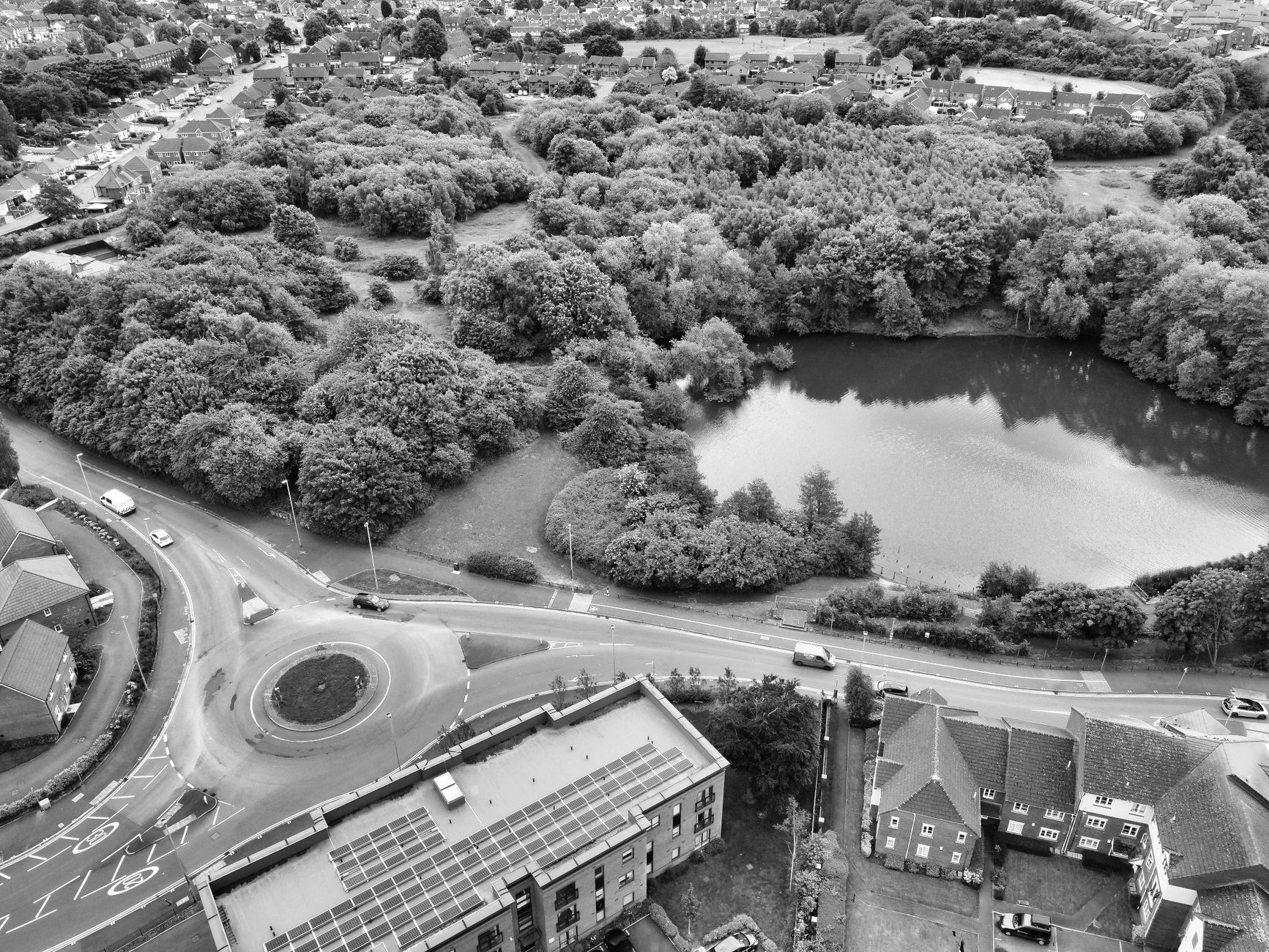
Solar panels in Birmingham and the wider West Midlands are more viable than many homeowners assume. The region sits in the UK’s middle irradiance band — not as sunny as the South West, but receiving around 1,050–1,100 kWh of solar radiation per square metre per year, which is comfortably enough to make a 4 kWp system generate 3,400–3,800 kWh annually. That’s meaningful, bill-cutting electricity — and the economics are further helped by local grant programmes, competitive installer pricing in a large urban market, and Birmingham City Council’s broadly supportive stance on solar in residential planning. This guide covers everything West Midlands homeowners need to know.
West Midlands Solar Irradiance: What the Numbers Mean for Your System
Solar irradiance — the amount of solar energy hitting a surface — is measured in kWh per square metre per year (kWh/m²/yr). The Energy Saving Trust’s solar panel data shows the UK range runs from around 900 kWh/m²/yr in the far north of Scotland to 1,250 kWh/m²/yr in the South West. Birmingham sits at approximately 1,050–1,100 kWh/m²/yr — roughly in line with the East Midlands, Nottingham, and Leicester, and meaningfully above northern English cities like Manchester (around 1,000) or Leeds (around 980).
In practical terms, a south-facing 4 kWp system in Birmingham will generate approximately 3,400–3,600 kWh per year. Compare that to the same system in Plymouth (around 3,900 kWh) or Inverness (around 3,000 kWh). The West Midlands is firmly in the viable middle — good enough to deliver a payback period of 8–12 years on a standard installation, depending on energy prices and self-consumption rate.
| Location | Irradiance (kWh/m²/yr) | 4 kWp Annual Generation (est.) | Relative to Birmingham |
|---|---|---|---|
| Plymouth | 1,250 | ~3,900 kWh | +10–12% |
| Bristol | 1,150 | ~3,650 kWh | +4–6% |
| Birmingham | 1,075 | ~3,500 kWh | — |
| Nottingham | 1,060 | ~3,450 kWh | -2% |
| Manchester | 1,000 | ~3,200 kWh | -8% |
| Edinburgh | 950 | ~3,050 kWh | -12% |
Birmingham City Council Planning Policy for Solar
Birmingham City Council has committed to net zero by 2030 and has embedded renewable energy generation as a priority in its Local Plan. For most residential solar installations, planning permission is not required — they fall under permitted development rights. Birmingham City Council does not currently have borough-wide Article 4 Directions that restrict solar on residential rooftops, though specific Conservation Areas and listed building rules apply in parts of the city.
Conservation Area restrictions are relevant in parts of Birmingham including:
- Bournville (the Cadbury Village conservation area)
- Edgbaston (parts of the Victorian suburb near the University)
- Moseley and Kings Heath (selected streets)
- Jewellery Quarter (limited residential)
In a Conservation Area, solar panels that are visible from a highway may require planning permission. The government’s permitted development technical guidance sets out the conditions in detail. If you’re unsure whether your street is within a Conservation Area, Birmingham City Council’s planning portal has an interactive map. When in doubt, submit a pre-application enquiry or a Lawful Development Certificate before installation.
Typical System Costs in the West Midlands
Birmingham’s large urban installer market means competition keeps prices relatively sharp compared to rural areas. Typical installed costs for a West Midlands home in 2026:
| System Size | Typical Home | Installed Cost (West Midlands) | Annual Generation | Est. Annual Savings |
|---|---|---|---|---|
| 3 kWp | 2-bed terrace | £4,800–£6,200 | 2,600–2,900 kWh | £500–£750 |
| 4 kWp | 3-bed semi | £6,500–£8,200 | 3,300–3,600 kWh | £650–£950 |
| 5 kWp | 4-bed detached | £8,500–£10,500 | 4,100–4,500 kWh | £800–£1,200 |
| 4 kWp + 5 kWh battery | 3-bed semi | £10,500–£13,000 | 3,300–3,600 kWh | £950–£1,350 |
Savings are estimated at a 60% self-consumption rate and 24p/kWh average unit rate. For a personalised estimate based on your specific home and energy usage, use our solar savings calculator.
Local Grants and Funding Schemes in the West Midlands
Several funding routes are available to West Midlands homeowners beyond the national ECO4 scheme:
ECO4 and ECO4 Flex
The Energy Company Obligation (ECO4) scheme funds solar panels and insulation for low-income households. Birmingham City Council operates an ECO4 Flex programme that allows referrals based on area deprivation data rather than individual benefit receipt — meaning homes in lower-income wards (parts of Handsworth, Sparkbrook, Erdington, and others) may qualify even if no individual tenant or occupier receives qualifying benefits. Contact Birmingham City Council’s housing energy team or your energy supplier to check eligibility. The government’s ECO4 scheme page has the full national eligibility framework.
West Midlands Combined Authority (WMCA) Energy Schemes
The West Midlands Combined Authority has published a Net Zero strategy with commitments to support domestic energy efficiency and renewable installation. The Combined Authority has previously run area-based retrofit programmes in partnership with member councils (Birmingham, Coventry, Wolverhampton, Sandwell, Walsall, Solihull, and Dudley). Check the WMCA’s current programme listings and your local council’s energy team for active schemes — these change as funding rounds open and close.
Home Upgrade Grant (HUG)
The Home Upgrade Grant (HUG2) scheme funds energy efficiency improvements for off-gas-grid homes and lower-income households. Where solar is combined with insulation or heat pump measures, HUG can cover a significant portion of the cost. Eligibility depends on household income and EPC rating — off-gas-grid properties rated D or below are the primary target. Check with your local council for whether HUG referrals are still active in your area.
Finding MCS-Certified Installers in Birmingham
Birmingham’s large population means there’s no shortage of solar installers operating in the area — but quality varies significantly. Always use an MCS-certified installer: only MCS-certified systems qualify for the Smart Export Guarantee, manufacturer warranty recognition, and most grant schemes. The MCS installer finder lets you search by postcode.
Tips for getting the best quotes in the West Midlands:
- Get at least three quotes from different installers — Birmingham’s competitive market means prices can vary by 15–20% for the same specification.
- Ask each installer to specify the panel brand and model, inverter make, and whether mounting hardware is roof-specific or generic. Cheaper quotes often use lower-tier components.
- Check Companies House for the installer’s trading history and whether they have a record of complaints with the MCS complaints process.
- Avoid any installer who quotes without conducting a site survey — a proper survey should include a roof condition assessment, shading analysis, and structural check.
Our solar guides section has a dedicated article on choosing and vetting installers, including the questions to ask and red flags to watch for.
Urban Density and Shading: A Birmingham-Specific Consideration
Birmingham’s urban density creates shading challenges that are less common in rural or suburban areas. The city has a high proportion of terraced housing — particularly in inner-city areas like Aston, Handsworth, Balsall Heath, and Sparkhill — where neighbouring properties, large trees, and chimney stacks can cast significant shadows on south-facing roofs.
Shading is the single biggest performance killer for solar panels. Even partial shading of one panel in a traditional string inverter system can reduce output across all connected panels by 30–50%. In densely built Birmingham streets, a thorough shading analysis is non-negotiable. Options for managing shading include:
- Microinverters: Each panel has its own inverter, so a shaded panel doesn’t drag down the rest of the string. More expensive (typically £500–£1,500 more than a string system) but can recover 20–30% more generation on heavily shaded roofs.
- DC optimisers: Fitted to each panel and connected to a central string inverter, optimisers (like SolarEdge or Tigo) provide most of the shading resilience benefit of microinverters at a lower cost.
- System design around shading: A good installer will orient panels to avoid the worst shading periods — for example, placing panels on the rear roof if the front faces a large tree or neighbouring chimney.
Ask your installer to provide a shading analysis using a tool like SolarEdge’s Designer or PVGIS with site-specific horizon data. If they can’t show you a modelled shading loss figure, that’s a red flag.
Is Solar Worth It in Birmingham? A Realistic Assessment
For a typical three-bedroom semi in Birmingham with a south or south-west facing rear roof, a 4 kWp solar system costing around £7,000–£8,000 will generate approximately 3,400–3,600 kWh per year. At a 60% self-consumption rate and 24p/kWh, that’s around £490–£520 in avoided bills annually, plus £100–£200 in SEG export income at current competitive rates. Total annual benefit: £590–£720. Payback period: 10–12 years. Given panels carry a 25-year performance warranty, that’s 13–15 years of net positive returns — around £8,000–£12,000 over the system’s working life in today’s money, and more if energy prices rise.
For houses with significant shading, smaller roofs, or east/west orientations, the numbers are lower — use our solar savings calculator to model your specific property. And for homeowners who are also looking at the EPC improvement angle — whether for green mortgages or rental compliance — the calculus improves further. Read our full post on how solar panels improve your EPC rating to understand how Birmingham homes can benefit from both the energy savings and the rating uplift.