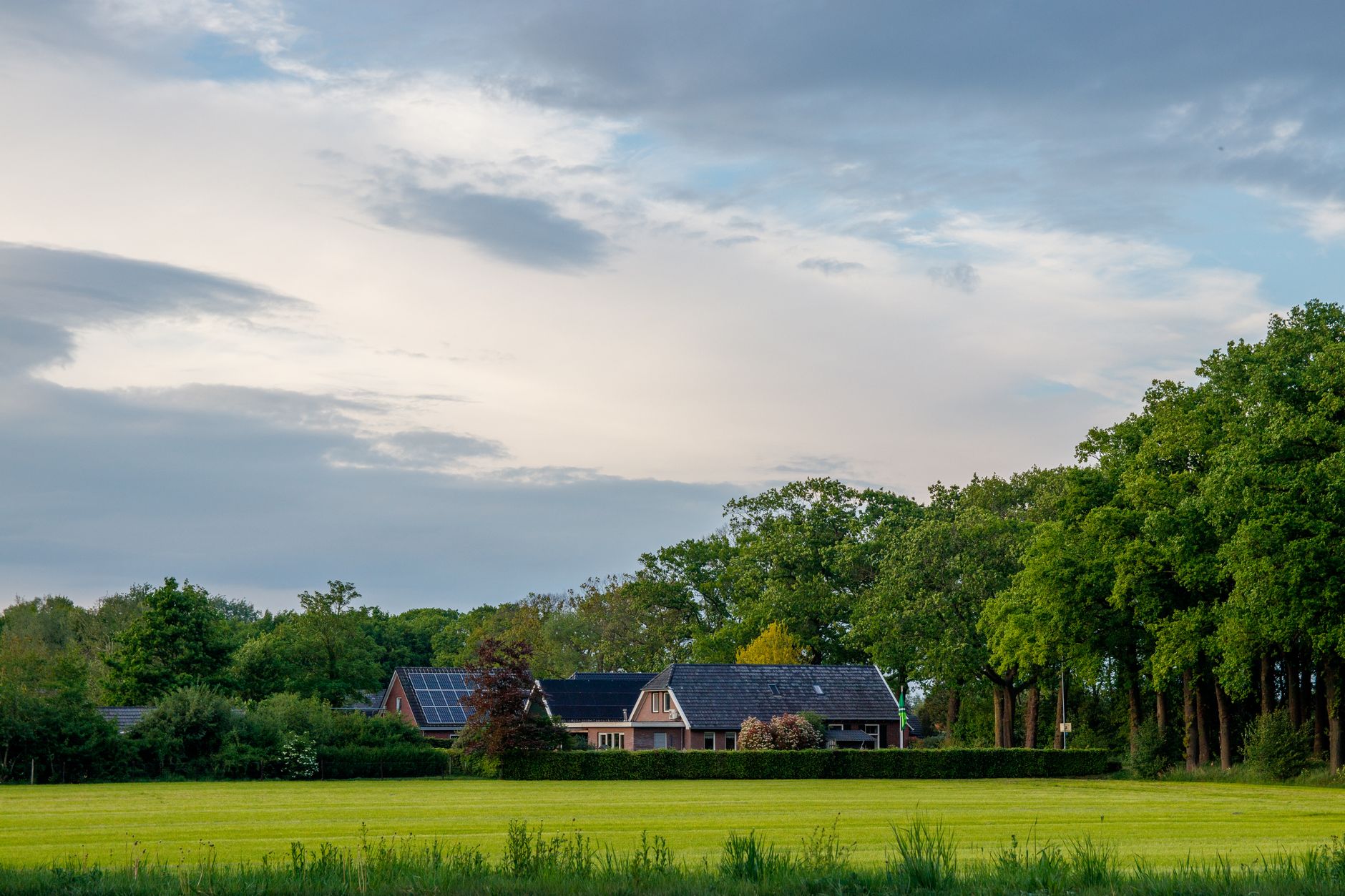
Solar panels for rural properties and off-grid living in the UK are not a compromise — they are often the most cost-effective way to power a home that sits far from the grid. Whether your cottage already has no connection, or you have received a quote from your Distribution Network Operator (DNO) to bring grid power to a remote plot and nearly fainted at the figure, a well-designed standalone solar-plus-battery system can run a modern home reliably across all four seasons. This guide covers your real options, how to size a system, what the costs look like, and what life genuinely looks like without a grid connection in the UK.
Off-Grid vs Grid-Tied With Backup: Which Is Right for You?
The most important decision rural homeowners face is whether to go fully off-grid or to maintain a grid connection (if one exists) and add solar-plus-battery as a backup and bill-reduction tool. These are meaningfully different systems.
A grid-tied system with battery backup keeps you connected to the national grid but uses solar and batteries to cover as much of your demand as possible. When your batteries are full and the sun is shining, you export surplus electricity and earn payments under the Smart Export Guarantee (SEG). When solar production is low — in December or during a prolonged cloudy spell — you draw from the grid normally. This is the lowest-risk option if a grid connection already exists.
A fully off-grid system has no grid connection at all. Your solar array, battery bank, and (usually) a backup generator must meet 100% of your energy needs 365 days a year. The system must be sized for worst-case winter production, not average annual output — which means significantly more panels and battery capacity than a grid-tied system of equivalent annual coverage. Off-grid is the right choice when a grid connection quote is prohibitively expensive or when the property is on land where running overhead cables is not permitted.
What does a grid connection cost in a remote area?
DNOs charge for new connections based on the distance from the nearest substation and the terrain involved. A rural connection a few hundred metres from the nearest cable might cost £5,000–£15,000. Extend that to a kilometre of farmland or woodland and the quote can reach £40,000–£80,000 or more. At those figures, a standalone solar system often repays itself before a grid connection would. Always get a formal connection quote from your DNO before ruling out off-grid — but equally, do not assume connection is affordable without asking.
Sizing a Standalone Off-Grid Solar and Battery System
Off-grid sizing starts with your annual electricity consumption. The average UK household uses around 3,500 kWh per year according to Energy Saving Trust consumption data, but rural properties often use more — electric heating, water pumps, workshop tools, and outbuildings all push usage higher. Log your actual consumption across a full year if possible. If the property is a new build, estimate from expected appliances.
From your annual kWh figure, the key calculation is: how much battery capacity do you need to survive your worst-case low-production period? In most of the UK, this is a three-to-five day period of cloud and rain in November through January. A common rule of thumb is to design for five days of autonomy without significant solar input, which means the battery bank must hold five times your daily consumption in usable capacity.
For a household using 3,500 kWh/year (roughly 9.6 kWh/day), that implies a usable battery bank of approximately 48 kWh — equivalent to around six Tesla Powerwall 3 units or a large lithium iron phosphate (LFP) rack system. The solar array itself should be sized to recharge the batteries within one to two decent production days, typically 8–12 kWp for most rural UK properties. Speak to a specialist off-grid installer and use our solar savings calculator as a starting point for your numbers.
Panel count and roof or ground space
Off-grid systems in rural areas often benefit from ground-mounted arrays, which sidestep roof orientation constraints and allow the optimal south-facing angle. A 10 kWp ground-mounted array requires roughly 50–60 m² of clear ground, needs planning permission in most cases, and must be positioned away from significant shading. See our solar panel installation guide for ground-mount specifics. Roof-mounted systems on rural properties follow the same 1.7 m² per panel rule as urban ones — a 10-panel 3.5 kWp system needs roughly 17 m² of usable roof area.
The Diesel Generator Hybrid: A Practical Safety Net
Most off-grid homes include a diesel or petrol generator as a backup for extended low-solar periods. A hybrid off-grid system pairs your solar array and battery bank with a generator that cuts in automatically when battery state of charge falls below a set threshold — typically 20%. The generator recharges the batteries and powers the home directly, then shuts off once batteries are back to a healthy level.
A 5–8 kW diesel generator costing £1,500–£4,000 to purchase can provide this safety net at a fraction of the cost of over-sizing your battery bank to cover every possible worst case. The trade-off is ongoing fuel cost and maintenance. In practice, well-designed hybrid systems in the UK south run the generator for perhaps 100–200 hours per year — a few hundred pounds in diesel — while systems in the north of Scotland may run it for 300–500 hours given lower winter irradiance. Factor this into your cost-of-ownership comparison when evaluating off-grid viability.
UK Solar Irradiance in Rural Areas: Scotland vs South England
Off-grid sizing must account for your specific location’s solar resource. The UK’s irradiance varies significantly by latitude and geography. South-facing locations in Cornwall and Kent receive around 1,100–1,200 kWh of solar energy per kWp of installed capacity per year. Edinburgh and central Scotland receive around 850–950 kWh/kWp/year — roughly 20% less annual generation from the same system size. Rural Highland locations can be lower still, particularly in glens with horizon shading from hills.
The bigger issue for off-grid design is winter irradiance. In December and January, a system in the Scottish Highlands may produce as little as 5–10% of its summer daily output. A system that cruises through summer on solar alone will struggle badly in January without an appropriately sized battery bank and backup generator. This is why off-grid systems in Scotland are typically sized more conservatively than equivalent southern systems, with larger battery banks relative to array size.
The UK government’s PVGIS-based solar decision support tool lets you enter your exact postcode and get monthly irradiance data for your site — essential reading before commissioning any off-grid design.
EV Charging Off-Grid: Is It Realistic?
Charging an electric vehicle from an off-grid solar system is possible but requires careful planning. A typical EV needs 15–25 kWh for a 60–80 mile charge. In summer, a well-sized off-grid system can handle this comfortably — the solar surplus that would otherwise go to waste charges the car overnight from the batteries or directly from midday generation. In winter, EV charging competes directly with house loads for scarce generation, and without careful management it can deplete batteries faster than the solar array recovers them.
The practical approach for off-grid EV charging is a smart EVSE (charger) that draws power only when battery state of charge exceeds a set threshold — say, 80% — and throttles or pauses charging when batteries fall. Some off-grid inverter systems (GivEnergy, Victron, SMA) support this natively. Alternatively, many rural off-grid EV owners charge primarily at public points during trips to town, treating the home system as a top-up rather than the primary charging source. Read our detailed guide on solar panels and EV charging for the full picture.
Solar-Powered Water Pumping for Rural Properties
Many rural off-grid properties rely on borehole pumps, surface water pumps, or pressure systems that run on electricity. These are typically 0.5–2.5 kW loads and, depending on duty cycle, can add 1–5 kWh/day to system demand. Some off-grid installations power water pumps on a dedicated solar circuit — a separate small panel and pump controller that runs the pump only during daylight hours and fills a header tank, avoiding battery discharge for this load entirely.
If your property relies on a submersible borehole pump, check the pump’s power draw and daily operating hours carefully — it is often one of the highest-consumption loads in a rural off-grid home and can derail a system that was not sized to include it.
What Does an Off-Grid Solar System Cost in the UK?
| System type | Typical array size | Usable battery | Indicative installed cost |
|---|---|---|---|
| Small off-grid cabin / holiday let | 2–4 kWp | 10–20 kWh | £12,000–£22,000 |
| Typical rural family home (south England) | 8–12 kWp | 30–50 kWh | £28,000–£50,000 |
| Larger home or high-consumption property (Scotland) | 12–20 kWp | 50–80 kWh | £45,000–£80,000 |
| Grid connection quote comparison (rural, 500 m) | — | — | £8,000–£25,000 |
| Grid connection quote comparison (rural, 1 km+) | — | — | £40,000–£100,000+ |
Off-grid system costs vary significantly by battery chemistry, inverter brand, and installer. The above figures are indicative based on installer quotes in 2026. Get at least three quotes from MCS-certified off-grid specialists before budgeting.
Key Things to Check Before Going Off-Grid
- Get a DNO connection quote first. You may be closer to the grid than you think, or the connection may be cheaper than expected. You cannot make an informed choice without a real figure.
- Audit your energy consumption. High-consumption appliances — electric cookers, immersion heaters, electric heating — can make off-grid systems impractically large. Many off-grid households switch to LPG or wood for cooking and heating, reducing electrical demand substantially.
- Use a specialist installer. Off-grid design is materially different from grid-tied design. Not all MCS-certified solar installers work on off-grid systems — ask specifically for off-grid experience and references.
- Plan for maintenance. Battery systems need periodic health checks, inverter firmware updates, and occasional component replacement. Remote properties can make call-outs expensive.
- Check planning rules for ground-mounted arrays. Permitted development rights that apply to roof-mounted panels often do not apply to ground-mounted systems, particularly on agricultural land. Check with your local planning authority early.
For broader context on the financial case, see our solar panel costs guide and our full guides library covering battery storage, inverters, and planning rules.