How-To
Solar Panels for Self-Build Homes in the UK
Self-build is the best opportunity to integrate solar properly — before walls go up and cables get buried. Here is…
September 30, 2026
Read more →
A solar immersion diverter is a small device that monitors your solar panel output in real time and automatically redirects any surplus electricity — power you would otherwise export to the grid — into your hot water cylinder via the existing immersion heater element. Instead of earning 5–15p per kWh through the Smart Export Guarantee, that same electricity heats your water for free, effectively replacing gas or electricity that would have cost you 6–8p/kWh (gas) or 24–28p/kWh (electric). For many UK households, this is a smarter use of surplus solar than exporting it at a low rate.
Your solar panels generate electricity throughout the day, but your household rarely uses all of it at the exact moment it is produced. Without a diverter or battery, surplus generation flows out to the grid. A solar immersion diverter sits between your consumer unit and your immersion heater and continuously reads your generation and consumption data — typically via a clamp sensor on your electricity meter or consumer unit. When it detects surplus power (generation exceeding demand), it proportionally powers the immersion element using only that surplus. If a cloud passes and generation drops, the diverter instantly reduces the power sent to the immersion heater. The system is entirely automatic and requires no user input after installation.
Popular models in the UK include the iBoost (Solar iBoost+), the Eddi by myenergi, and the Solic 200. The Eddi is particularly well regarded because it can divert to two loads simultaneously (e.g. immersion heater and underfloor heating), has a display unit showing energy diverted, and integrates with myenergi’s Zappi EV charger for whole-home energy management. The iBoost is simpler and cheaper, with a wireless transmitter and a buddy unit that gives basic energy readings. The Solic 200 is a budget-friendly option with a solid track record.
Supply and installation costs vary depending on the device, your property’s existing wiring, and whether your installer is visiting for this job alone or combining it with a solar panel installation.
| Device | Supply Cost | Installed Cost (typical) | Notes |
|---|---|---|---|
| Solic 200 | ~£130 | £250–£350 | Budget option, single load |
| Solar iBoost+ | ~£200 | £350–£500 | Wireless sensor, buddy display |
| myenergi Eddi | ~£280 | £450–£650 | Two outputs, app control, Zappi integration |
| Solar iBoost+ (premium install) | ~£200 | Up to £800 | Complex wiring or old consumer unit |
If you are having solar panels installed at the same time, most installers will add a diverter for £150–£250 on top of the panel installation cost, since the electrician is already on site and the labour is minimal. Retrofitting a diverter to an existing solar system costs more in labour relative to the device price, typically £200–£350 for the installation work alone.
There are no specific government grants for solar diverters in 2026, though if your solar installation qualifies under the ECO4 scheme or other low-income support, it is worth asking your installer whether ancillary equipment like a diverter can be included. VAT on solar energy products was cut to 0% from April 2022 and remains at 0% in 2026, so you will not pay VAT on either the device or the installation.
The financial case for a solar diverter depends on comparing two alternatives for your surplus solar:
For gas households, the comparison is closer. At 15p SEG vs 7p gas saving, exporting via Octopus actually earns more per kWh. However, most households are not on the best SEG tariff — the average SEG rate claimed in 2025 was closer to 7–9p/kWh, according to Ofgem’s SEG data. At 8p export vs 7p gas saving, a diverter offers comparable value — with the added benefit that you do not need a smart meter to claim diverter savings, whereas SEG export payments require half-hourly smart meter data.
For all-electric homes or homes with an electric immersion heater as a backup to a heat pump, the maths strongly favour the diverter. Saving 26p/kWh by avoiding grid electricity purchase beats a 15p/kWh SEG rate easily. The Energy Saving Trust estimates that a solar diverter can save a typical household £150–£400 per year on water heating costs, depending on system size and hot water demand.
Solar immersion diverters work with properties that have a hot water cylinder with an immersion heater element — typically a standard 3 kW immersion element rated at 240V AC. This is the most common setup in homes with:
Combi boilers: not compatible. A combi boiler heats water on demand and does not use a hot water cylinder or immersion heater. There is nowhere to divert solar electricity for water heating with a combi. If you have a combi, a diverter is not an option — you would need to either add a separate hot water cylinder (a significant plumbing project) or consider a solar battery instead. Check our home battery storage guide if you have a combi boiler and want to make better use of surplus solar.
Heat pumps: compatible, but requires care. If you have an air source or ground source heat pump with a hot water cylinder, you can add a solar diverter to the immersion element in that cylinder. However, the immersion element should only serve as a top-up — running it heavily could undermine your heat pump’s efficiency and energy use. Consult your heat pump installer before adding a diverter, and configure it so the immersion only activates when the cylinder is below the heat pump’s target temperature or when excess solar is significant.
A solar immersion diverter must be installed by a qualified electrician — it involves work on your consumer unit and electrical circuits, which is notifiable work under Part P of the Building Regulations in England and Wales. You do not specifically need an MCS-certified installer for the diverter itself (MCS applies to the solar panels), but you do need a competent person registered with a scheme like NICEIC, ELECSA, or the NAPIT to carry out the electrical work legally.
The installation typically involves:
The physical installation takes 2–4 hours for a straightforward retrofit. Your installer should provide a Minor Works Certificate or an Electrical Installation Certificate on completion. MCS-certified solar installers typically offer diverter installation alongside solar, but you can also use a local NICEIC-registered electrician for a retrofit.
At a total installed cost of £350–£500 and annual savings of £150–£300 (depending on system size, hot water demand, and fuel type), a typical solar immersion diverter pays back in 1.5–3 years. This makes it one of the fastest-payback solar accessories available in the UK — far quicker than a home battery, which typically takes 8–12 years. The device itself has a lifespan of 10–20 years, so the return on investment is excellent.
To model your specific payback, consider:
Use our solar savings calculator to estimate how much surplus your system is likely to generate, and compare the value of diverting vs exporting based on your current tariffs. You can also read our detailed solar panel costs guide to understand the full economics of a solar installation including add-on accessories.
For most households with a hot water cylinder and existing solar panels, the answer is yes — particularly if you are on a low SEG tariff, do not have a smart meter, or heat your water electrically. At £350–£500 installed with a 1.5–3 year payback, a solar immersion diverter is one of the most cost-effective solar accessories you can add.
It is less compelling if you are on Octopus Energy’s 15p/kWh SEG tariff and heat your water with gas — in that case, exporting earns more per kWh than you save on gas. And if you have a combi boiler, a diverter is simply not an option.
If you are trying to decide between a diverter and a battery, the diverter wins on payback speed and simplicity. A battery stores energy for general use in the evening; a diverter covers just your hot water, but does so very cheaply. Many households eventually add both. Check our Smart Export Guarantee guide to understand how to optimise both your export income and your self-consumption together.
Self-build is the best opportunity to integrate solar properly — before walls go up and cables get buried. Here is…

Garage and outbuilding roofs are often better solar locations than the main house — south-facing, unshaded, and away from chimney…
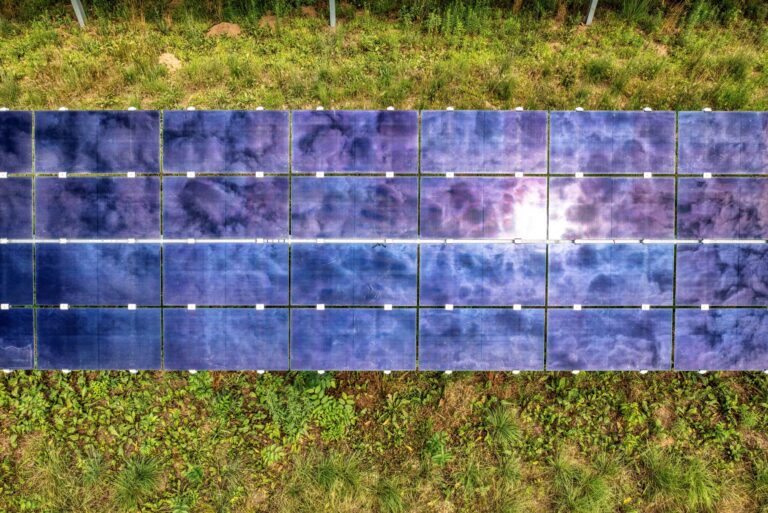
Ground-mounted solar panels are worth considering when your roof is shaded, north-facing or structurally unsuitable. Here is what they cost,…