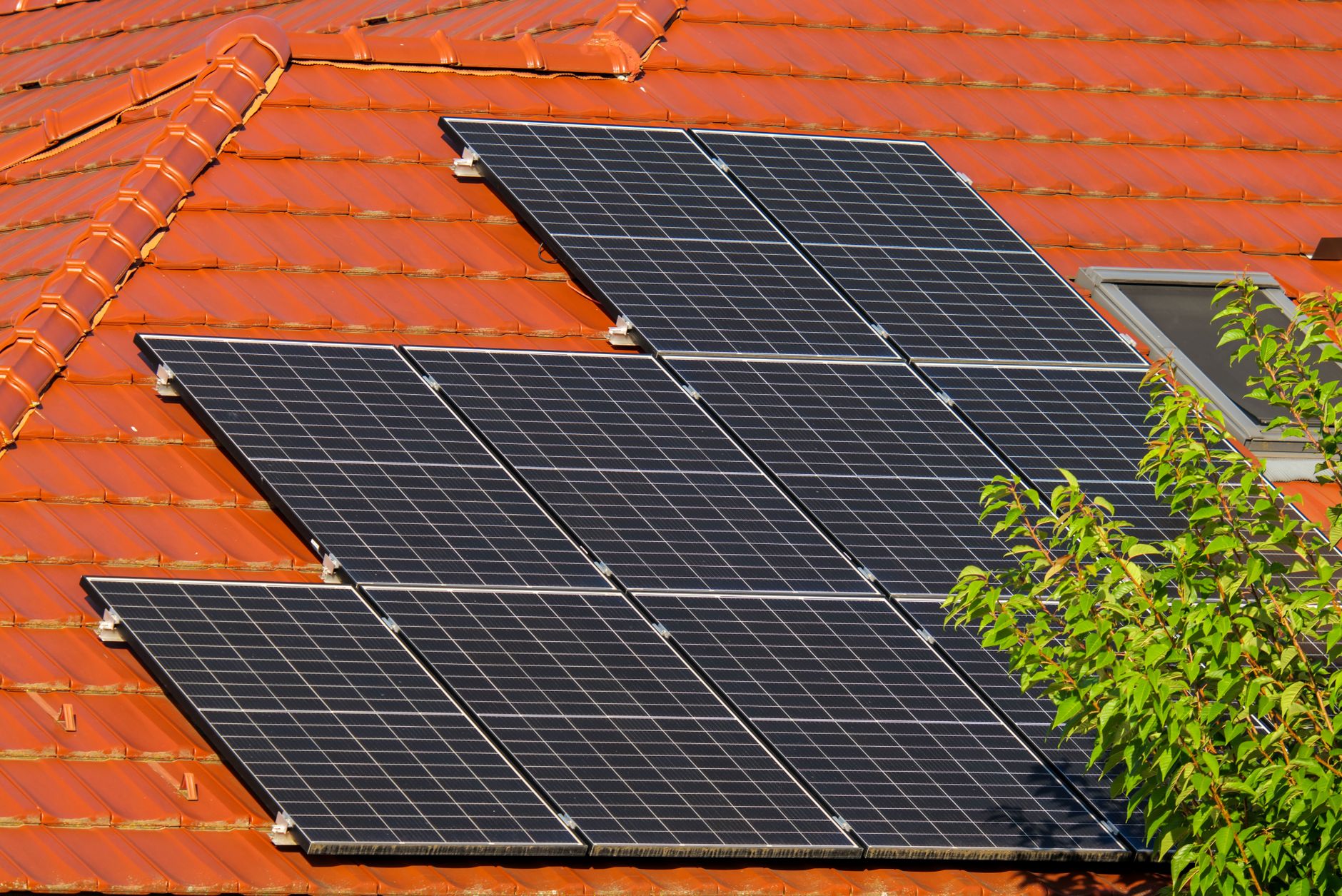
Solar panels can improve your EPC rating by one or two bands — moving a typical mid-terrace from a D up to a B or C — and in 2026 that shift carries real financial weight. From green mortgage discounts to upcoming rental legislation, your EPC band is no longer just a certificate in a drawer. This post explains exactly how the SAP calculation scores solar panels, what band improvement you can realistically expect, and how to combine solar with other measures to squeeze out the maximum score.
How the SAP Calculation Works for Solar Panels
Every EPC is produced using the Standard Assessment Procedure (SAP), the government’s methodology for rating a home’s energy performance on a scale of 1 to 100+. The higher the SAP score, the better the EPC band: A (92+), B (81–91), C (69–80), D (55–68), E (39–54), F (21–38), G (1–20).
SAP calculates energy demand based on the building fabric — wall insulation, loft insulation, glazing, heating system — then offsets that demand against on-site renewable generation. Solar panels contribute to the SAP score in two ways:
- Reduced grid electricity consumption: Solar generation displaces purchased electricity, which carries a high carbon factor in SAP. Cutting grid consumption produces a meaningful SAP point improvement.
- Export credits: Surplus electricity exported to the grid is credited back, further reducing the modelled energy cost used in the SAP calculation.
The actual points gain depends on your system size, roof orientation, and the home’s baseline demand. A 4 kWp south-facing system on a typical semi-detached typically adds 8–15 SAP points. That can be enough to push a mid-D home (say, SAP 60) into the C band. An assessor uses the RdSAP (Reduced Data SAP) methodology for existing homes, which uses standardised lookup tables rather than full modelling, so the precise gain will vary slightly from property to property.
Typical EPC Band Improvement: D to C, or Even D to B
For most UK homes currently rated D or E, solar panels alone can achieve a one-band improvement. The table below shows typical starting points and likely outcomes after a standard solar installation, based on common UK house types:
| Property Type | Typical Starting EPC | System Size | Expected New EPC | SAP Points Gained |
|---|---|---|---|---|
| Mid-terrace, gas CH | D (62) | 3.5 kWp | C (72) | ~10 |
| Semi-detached, gas CH | D (58) | 4 kWp | C (70) | ~12 |
| Detached, gas CH | D (55) | 5 kWp | C (69) | ~14 |
| Semi-detached, heat pump | C (74) | 4 kWp | B (84) | ~10 |
| Detached, heat pump + good insulation | C (78) | 6 kWp | B (91) | ~13 |
Homes already on a heat pump benefit differently. Because heat pumps use electricity (rather than gas) as their primary energy source, and because SAP rewards low-carbon heating, the carbon factor applied to your consumption is already lower — but solar still adds meaningful SAP points by reducing electricity demand further. A well-insulated home on a heat pump with a 5–6 kWp solar system can realistically reach band A or high B.
Green Mortgages: What an EPC Uplift Can Unlock
A better EPC is increasingly worth money on your mortgage. Green mortgage products — offered by Barclays, NatWest, Halifax, Nationwide, Lloyds and others — typically offer a rate discount of 0.05–0.25% for homes rated EPC A or B, and some extend preferential rates to C. On a £250,000 repayment mortgage over 25 years, a 0.1% rate reduction saves around £1,500 over a two-year fixed term — and potentially much more over the life of the loan.
Some lenders also offer cashback on green improvements. Check the Energy Saving Trust’s green mortgage overview for current products and eligibility criteria. If you are remortgaging after installing solar, it is worth commissioning a new EPC before approaching lenders — the old certificate will not capture your improved rating.
Upgrading from EPC D to B could save a homeowner £3,000–£6,000 in mortgage interest over the life of a typical 25-year loan, on top of the energy bill savings from the panels themselves.
Rental Properties: The EPC C Requirement by 2028
For landlords, the EPC stakes are particularly high. Under proposed legislation, all new tenancies in England must meet EPC C by 2028, with all tenancies (including existing ones) required to comply by 2030. While the exact enforcement timeline has shifted, the direction of travel is clear — the government’s consultation on private rented sector energy standards confirms C as the target band.
Many rental properties currently sit at D or E. Solar panels are one of the most cost-effective routes to band C for mid-terrace and semi-detached properties with reasonable roof access. Unlike loft insulation or solid wall insulation, solar doesn’t require vacating the property or creating major disruption — installation typically takes one to two days. For landlords managing HMOs or multiple properties, the economics of a solar upgrade can be particularly attractive. Read our guide to solar panels for HMOs for landlord-specific considerations.
There is a cost cap in the proposed regulations — landlords would not be required to spend more than £15,000 per property achieving EPC C. A solar installation typically costs £5,000–£10,000, well within that cap, and it raises EPC while generating ongoing income via the Smart Export Guarantee.
Quantifying the Value of an EPC Uplift
Beyond mortgages and rental compliance, an improved EPC affects resale value. Research by Rightmove and Lloyds Banking Group has consistently found that buyers pay a premium for more energy-efficient homes. Properties rated B or above sell for around 5–12% more than equivalent EPC D or E properties in the same area. On a £300,000 home, that premium is £15,000–£36,000 — multiples of what solar costs to install.
Use our solar savings calculator to model your specific situation — including both the energy bill savings and an estimate of the EPC improvement — so you can make a genuinely informed decision before committing to installation.
Combining Solar With Other Measures for Maximum SAP Score
Solar panels work best as part of a co-ordinated energy upgrade. SAP rewards both reduced demand and low-carbon supply, so the biggest EPC improvements come from attacking both simultaneously:
- Loft insulation: Cheap (often free under ECO4) and adds 2–6 SAP points by reducing heat loss. Should be the first measure for any uninsulated property — it costs very little and the SAP gain is immediate.
- Cavity wall insulation: Adds 4–8 SAP points for typical semi-detached houses. Combined with solar, this can push a D-rated home well into C.
- Heat pump: Replacing a gas boiler with an air source heat pump dramatically changes the carbon weighting in SAP (gas has a much higher carbon factor than electricity from renewables). Combined with solar, this is the single most powerful combination for a high EPC band — typically pushing a mid-C home into B or even A.
- Battery storage: Batteries do not directly affect the SAP score, but they increase self-consumption of solar electricity, which does feed into the modelled energy cost used in the calculation. The benefit in SAP terms is modest but real.
- Double or triple glazing: Adds 2–5 SAP points for properties still on single glazing or poor-quality double glazing.
The most efficient sequencing is usually: insulation first (cheapest marginal SAP gain), then solar (biggest single-measure gain for most homes), then heat pump if budget allows. This order makes sense because insulation reduces the heating demand the heat pump needs to meet, which in turn reduces the heat pump size and cost.
| Measure | Typical SAP Points Added | Typical Cost | Notes |
|---|---|---|---|
| Loft insulation (uninsulated → 270mm) | 3–6 | £300–£600 (often free ECO4) | First measure for most homes |
| Cavity wall insulation | 4–8 | £500–£1,500 (often subsidised) | Only where cavity exists |
| Solar panels (4 kWp) | 8–15 | £6,500–£8,500 | Biggest single lift for most homes |
| Air source heat pump | 10–20 | £8,000–£15,000 | Includes carbon factor improvement |
| Double glazing (replacing single) | 2–5 | £3,000–£8,000 | Lower priority unless windows are poor |
What to Do Next
If your current EPC is D or below, start by getting a fresh assessment from an MCS-certified assessor — your existing certificate may be several years old and won’t reflect any improvements you’ve already made. Then get solar quotes from at least three installers, ask each one to model the expected SAP improvement as part of their survey, and run the numbers against any green mortgage products you might qualify for.
Our full guides section covers every aspect of solar installation, from choosing system size to understanding the Smart Export Guarantee. If you want to start with the numbers, our solar savings calculator gives a personalised estimate based on your home, location, and energy usage.