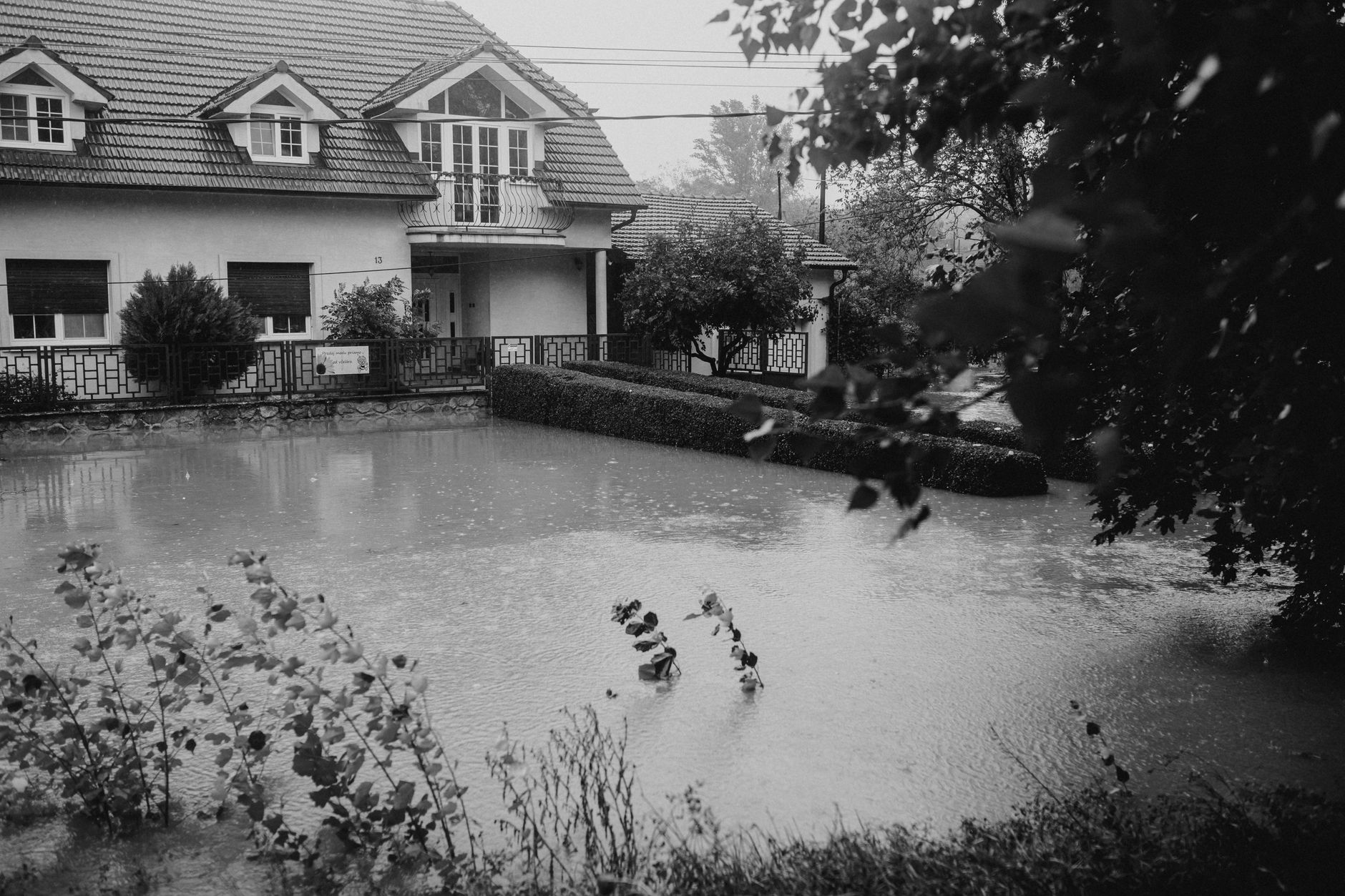
Solar panels and flood risk are not always thought about together, but for the roughly 5.2 million homes in England that the Environment Agency identifies as being at risk of flooding, they should be. The panels themselves sit on your roof and are essentially waterproof — but the inverter, battery, wiring, and connection points are a different matter. If you live in a flood zone and are considering solar, here is what you need to know before you commit to an installation.
Do Solar Panels Affect Your Flood Risk Assessment?
The short answer is no — solar panels do not change your property’s flood risk classification. The Environment Agency’s flood risk maps assess inundation risk based on proximity to watercourses, ground elevation, drainage capacity, and historical flood events. A rooftop solar installation adds no impermeable surface at ground level and doesn’t affect the flood zone category your home falls into.
What solar panels can affect is roof water runoff — the speed and volume of rainwater flowing off your roof during heavy rainfall. This is worth understanding, because poorly installed panels can increase runoff in ways that create minor local drainage issues. A well-designed installation, however, has a negligible effect or can even slow runoff slightly. More on that below.
Inverter Placement in Flood-Prone Homes: The Critical Decision
The solar inverter converts DC electricity from the panels into AC electricity your home can use. It’s a relatively delicate piece of electronics — far more vulnerable to water damage than the panels themselves. Most inverters are IP65 rated (protected against water jets) but are not designed for submersion. In a flood, a ground-floor inverter will almost certainly be destroyed.
Standard installation practice in the UK is to mount the inverter on an interior wall, often in a garage, utility room, or loft. For flood-prone homes, the key question is: what is the likely flood depth, and where is the inverter relative to that depth?
- Loft installation: The safest option for flood-risk properties. The inverter is mounted at loft level, well above any realistic flood depth. The trade-off is slightly longer cable runs and the need for adequate loft ventilation — inverters generate heat and need airflow. Most modern string inverters and hybrid inverters can be loft-mounted without issue.
- High wall mounting: If loft installation isn’t practical, mount the inverter as high as possible on a first-floor interior wall. Aim for at least 1.2 metres above your highest recorded or predicted flood level.
- Garage or utility room: Acceptable in lower-risk zones, but not recommended for properties with a history of flooding. Water in a garage reaches inverter height quickly.
Discuss inverter placement explicitly with your installer before agreeing to a design. If your installer doesn’t raise flood risk as a consideration and you’re in a flood zone, raise it yourself. A good installer will adapt the design accordingly.
Battery Storage in Flood-Risk Properties
Battery storage units — such as the Tesla Powerwall, GivEnergy or SolarEdge Home Battery — are typically installed at floor level, either in a garage or utility room. They are heavy (80–120 kg), large, and contain lithium-ion cells that must not be submerged. A flooded battery is not just an expensive write-off — it’s a potential fire and chemical hazard.
For flood-risk properties, the options are:
- Raised platform installation: Mount the battery on a robust raised platform at least 300–600mm above expected flood depth. This requires structural assessment and isn’t suitable for all battery models, but some manufacturers support it.
- First-floor installation: Some battery units can be wall-mounted at first-floor level. Check the manufacturer’s specifications — not all units are designed for this, but options like the GivEnergy wall-mounted units and some Pylontech stacks can work at height.
- Defer battery installation: If you’re in a high-risk flood zone (Flood Zone 3), it’s worth considering whether a battery is practical at all until you’ve assessed the placement options with a qualified installer and surveyor.
Our battery storage guide covers the full range of available systems and their installation requirements — useful background before discussing flood-risk placement with an installer.
Insurance Implications for Solar in Flood Zones
Solar panels installed by an MCS-certified installer are typically covered under your standard home buildings insurance as a permanent fixture. However, there are two flood-related insurance issues to be aware of:
Confirming Your Cover Before You Install
Tell your home insurer about the solar installation before (or immediately after) it goes in. Most insurers add solar panels to your buildings policy at no extra cost, but failing to notify them can create problems when you claim. In flood-risk areas where your insurer is already applying flood exclusions or excess uplift, check explicitly whether flood damage to the solar system (particularly the inverter and wiring) is covered.
Flood Re and Solar
Flood Re is the government-backed reinsurance scheme that makes flood cover affordable for properties in high-risk areas. Policies underwritten by Flood Re cover buildings and contents, and solar panels fixed to the building would generally fall under the buildings element. However, Flood Re policies exclude commercial properties — so if you’re a landlord with a buy-to-let in a flood zone, check whether your rental property insurance uses Flood Re and covers the solar system.
The Which? guide to flood insurance is a useful overview of how Flood Re works and what it does and doesn’t cover.
Roof-Mounted Panels and Water Runoff: What the Evidence Shows
Research on solar panels and roof runoff shows a nuanced picture. Panels can affect the quantity, timing, and temperature of water flowing off your roof in a few ways:
- Increased runoff velocity: Water hitting the smooth surface of a solar panel runs off faster than water hitting roof tiles, which have a rougher surface that slows flow. This can increase peak runoff rates during heavy rain.
- Channelling effect: Panels create channels along their lower edges, concentrating water flow and potentially overwhelming guttering that was sized for the original roof surface. An installer should assess your guttering capacity as part of the survey — oversized or additional downpipes may be needed.
- Shading effect: In some configurations, panels shade part of the roof, reducing solar heating and slowing snowmelt. This is unlikely to be a flood risk factor in UK conditions but is worth noting for winter drainage planning.
For most properties, these effects are minor and manageable with appropriate guttering. For homes directly adjacent to watercourses or in Flood Zone 3, it’s worth raising the question of runoff with your installer and, if necessary, with your local planning authority or drainage authority.
What to Do If Your Solar Panels Are Flood-Damaged
If your property floods and your solar system is affected, follow this sequence:
- Do not attempt to use the system. Water and high-voltage DC electricity are a lethal combination. Even if the panels look undamaged, the wiring, connection boxes, and inverter may have been compromised. Leave the system isolated until it has been inspected by an electrician or your original installer.
- Contact your installer. Your MCS-certified installer should be the first call. They will carry out an inspection and identify what needs replacing. Most inverter and panel warranties don’t cover flood damage specifically, so this will likely come through your buildings insurance.
- Contact your insurer. Log the claim as soon as possible. Keep a photographic record of any visible damage before anything is moved or replaced.
- Check your SEG arrangement. If you’re registered with a Smart Export Guarantee provider, notify them that your system is offline. You won’t earn SEG payments while the system is non-operational, but most contracts have provisions for temporary outages. See our Smart Export Guarantee guide for details.
Planning Permission and Flood Zones
Solar panels on a private dwelling typically fall under permitted development rights and don’t require planning permission in England, Scotland, and Wales — provided the installation meets standard conditions (panels flush with the roof, not protruding above the ridge line, etc.). This applies regardless of your flood zone status. However, if you live in a Conservation Area or your home is listed, additional restrictions apply — check with your local planning authority.
If you’re installing ground-mounted solar in a flood zone — for example, a larger system in the garden of a rural property — the planning situation is more complex and a flood risk assessment may be required. The Environment Agency’s planning guidance on flood risk sets out when an assessment is required and what it must cover.
The Bottom Line for Flood-Risk Homeowners
Solar panels are a sensible investment even in flood-risk areas, provided the installation is designed with flood resilience in mind. The panels themselves are not the problem — it’s the ground-level or low-level equipment that needs careful thought. Mount inverters and batteries as high as practically possible, confirm your buildings insurance covers the system, and use an MCS-certified installer who will take your specific circumstances into account.
Use our solar savings calculator to model the financial case for your home, then get quotes from at least three MCS-certified installers and raise flood resilience explicitly in your survey conversations.