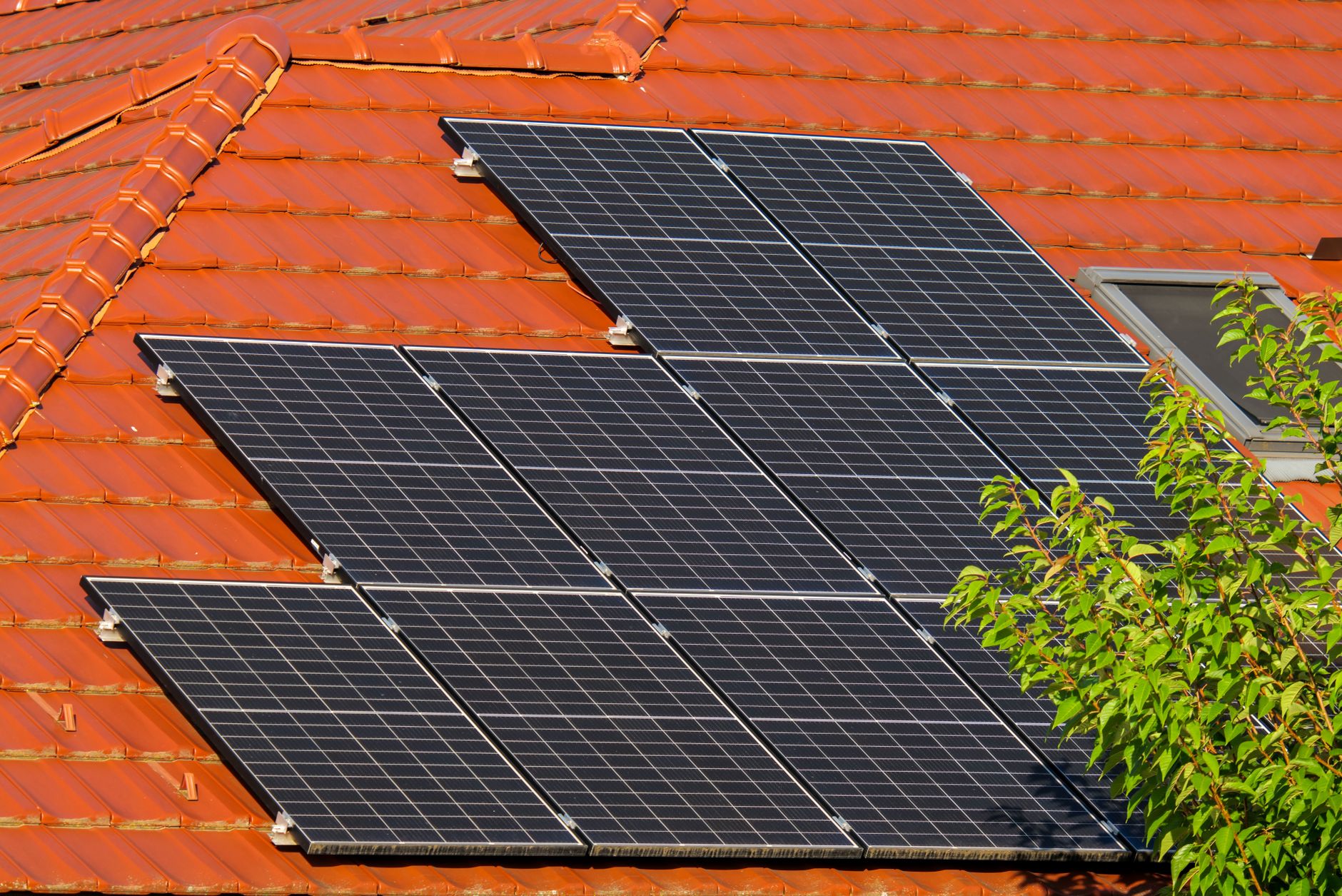
Solar panels for HMOs present a different set of considerations from standard buy-to-let properties. The planning rules, metering options, SEG arrangements, and EPC requirements all interact in ways that can trip up even experienced landlords. Done well, HMO solar can cut energy costs, raise EPC bands to meet incoming rental legislation, and generate ongoing SEG income. Done poorly, it creates billing disputes with tenants and compliance headaches. This guide covers everything HMO landlords need to think through before installing solar panels.
HMO Planning Rules and Solar Panels: Article 4 Directions
In England, rooftop solar panels on most domestic properties fall under permitted development (PD) rights — meaning you don’t need planning permission as long as the installation meets standard conditions (panels don’t protrude above the roof ridge, they’re on a roof facing a highway with conditions met, etc.). For HMOs, the key risk to PD rights comes from Article 4 Directions.
An Article 4 Direction is a local planning authority’s power to remove specific permitted development rights in a defined area. Many councils have used Article 4 Directions to control HMO proliferation — particularly in university towns and cities. These directions typically withdraw the permitted development right to change a C3 (family home) to a C4 (small HMO), but some Article 4 areas also restrict external alterations, which can include solar panels.
Before installing solar on an HMO, check with your local planning authority whether:
- The property sits within an Article 4 Direction area.
- If so, whether that Direction specifically restricts external alterations or roof works.
- Whether the property is in a Conservation Area, where solar facing a highway may already be outside PD rights regardless of Article 4.
The government’s permitted development technical guidance sets out the standard conditions. If you’re in doubt, submit a Lawful Development Certificate application — it costs around £103 and gives you written confirmation that PD applies.
Metering Options: Whole-House vs Per-Room
How you meter electricity in an HMO fundamentally shapes how solar benefits flow — and who receives them. The two main approaches are:
Whole-House Metering (Bills Included)
Many HMOs are let on bills-included tenancies where the landlord pays the electricity bill and charges a higher all-inclusive rent. In this model, solar works straightforwardly: the panels reduce the electricity bill the landlord pays, and the landlord retains all the savings and SEG income. This is the simplest arrangement from a solar management perspective.
The risk is that bills-included tenants have no incentive to conserve energy. Landlords should consider smart monitoring to track consumption and model their solar self-consumption rate accordingly — if tenants use a lot of electricity in the evening when panels aren’t generating, self-consumption will be lower than on a single-occupant property.
Per-Room Metering
Some HMOs — particularly larger properties — have individual meters for each room or suite. Tenants pay their own electricity bills. In this model, directing solar generation to individual rooms is technically complex and generally impractical. Instead, solar energy is best used for shared-area supplies (lighting, hallways, shared kitchen appliances) and the landlord retains the benefit of any solar used in common areas, while exporting surplus for SEG income.
If you’re considering per-room metering on a new HMO, take professional electrical advice. The wiring and meter installation requirements under the HMO licensing regulations are detailed, and adding solar generation to a per-room metered property adds complexity to the electrical design.
Who Gets the SEG Income: Landlord or Tenant?
The Smart Export Guarantee (SEG) contract is held by the person who signs up with the SEG licensee — and that’s almost always the landlord, since the SEG account is linked to the electricity supply meter at the property, not to individual rooms. On a bills-included HMO, this is clear: the landlord owns the supply contract, signs the SEG agreement, and receives export payments directly.
Where tenants pay their own electricity bills, the position is more nuanced. If a tenant holds the electricity supply contract in their name, they would technically hold the meter point — but in most HMO structures the landlord retains the supply contract and bills tenants as a reseller. In that case, the landlord retains the SEG income.
The key point: Ofgem’s SEG rules require the SEG generator to be the owner or occupier of the premises and to have a qualifying system. Most HMO landlords — as property owners — meet this test. Confirm the arrangement explicitly with your chosen SEG provider before registering. Our Smart Export Guarantee guide covers the registration process and current best rates.
HMO Licensing and Solar Panels
Solar panels don’t directly affect HMO licensing — your licence is granted based on the property’s compliance with fire safety, room sizes, facilities, and management standards. However, two licensing-adjacent issues are worth noting:
- Electrical installation condition reports (EICRs): HMOs require an EICR every five years. Adding solar panels constitutes a new electrical installation and should be covered in your next EICR. Ensure your solar installer signs off the DC and AC wiring to the required standard and provides the relevant completion certificates — these form part of your licensing compliance documentation.
- Inverter noise: Modern string inverters are quiet (around 25–40 dB) but not silent. Placement in a shared utility room or hallway where tenants sleep nearby can generate complaints. Factor inverter noise into your placement decision, and check the manufacturer’s noise specification before committing to a location.
ECO4 Eligibility for HMOs
The ECO4 (Energy Company Obligation) scheme funds energy efficiency improvements — including solar panels — for low-income and vulnerable households. HMOs can qualify, but the eligibility rules have specific requirements:
- The property must currently be EPC D, E, F, or G to qualify for the main ECO4 obligation.
- At least one tenant must be in receipt of a qualifying benefit (Universal Credit, Pension Credit, Housing Benefit, etc.) — or the property must qualify under the ECO4 Flex route, where local authorities can refer properties based on area-level deprivation data rather than individual benefit status.
- Solar panels are an eligible ECO4 measure for HMOs in lower EPC bands, particularly when combined with insulation measures.
ECO4 Flex is particularly relevant for HMOs in deprived urban areas. Local authorities can use area-based criteria to refer properties in certain postcodes — meaning your HMO may qualify even if individual tenants aren’t on qualifying benefits. Contact your local council’s housing or energy efficiency team to find out whether ECO4 Flex referrals are available in your area. The government’s ECO4 guidance sets out the full eligibility framework.
Managing Tenant Turnover With Solar Income
HMOs typically have higher tenant turnover than standard buy-to-let properties. This creates a specific challenge for solar: your self-consumption rate — and therefore your energy savings — depends on how much electricity is being used in the property during daylight hours. With frequent room changes and varying tenant numbers, your consumption patterns may shift considerably from month to month.
Practical steps to manage this:
- Install a solar monitoring system (most inverters include app-based monitoring, or add a separate monitor like a Solar Edge or SolarLog unit). This lets you track generation vs consumption in real time and adjust your SEG tariff if your export share increases significantly.
- Plan for a battery if occupancy is variable. A battery stores daytime generation for evening use, smoothing out the self-consumption rate regardless of tenant behaviour. On a fully occupied HMO, self-consumption is typically high — tenants working, cooking, and using shared facilities — but a battery helps during low-occupancy periods.
- Factor the solar income into your financial modelling conservatively. Use 50–60% self-consumption as a base assumption for a bills-included HMO, rather than the 60–70% often quoted for single-family homes.
EPC Requirements for HMOs
HMOs are subject to the same EPC requirements as standard rental properties: currently EPC E or above, with the proposed requirement to reach EPC C by 2028 for new tenancies and 2030 for all tenancies. An HMO with multiple rooms and a large electricity demand is often well-placed to benefit from solar — the panels contribute SAP points that raise the EPC band, and the large usable roof area of a typical HMO (a three-storey terrace, say) can accommodate a 5–8 kWp system.
For the EPC benefit to be captured, your assessor needs to know about the solar installation. Commission a new EPC after the panels are installed — the previous certificate won’t show the improvement. For more detail on how solar affects SAP scoring, read our guide to solar panels and EPC ratings.
Use our solar savings calculator to model the costs and returns for your HMO, and get at least three quotes from MCS-certified installers who have experience with HMO or commercial installations — the electrical requirements are more complex than a standard domestic job.